Postcards
16/09/18Maastricht-Postcards carry one world into another, just like ethnography (Pandian and McLean 2017). Their layered materiality – the chocolate stains and pen smudges, curled corners, fluorescent barcodes, spots faded from sun-exposure, and, of course, the stamps – carry traces not only of trips through postboxes, sorting machines and airplanes but also of other, imagined worlds.
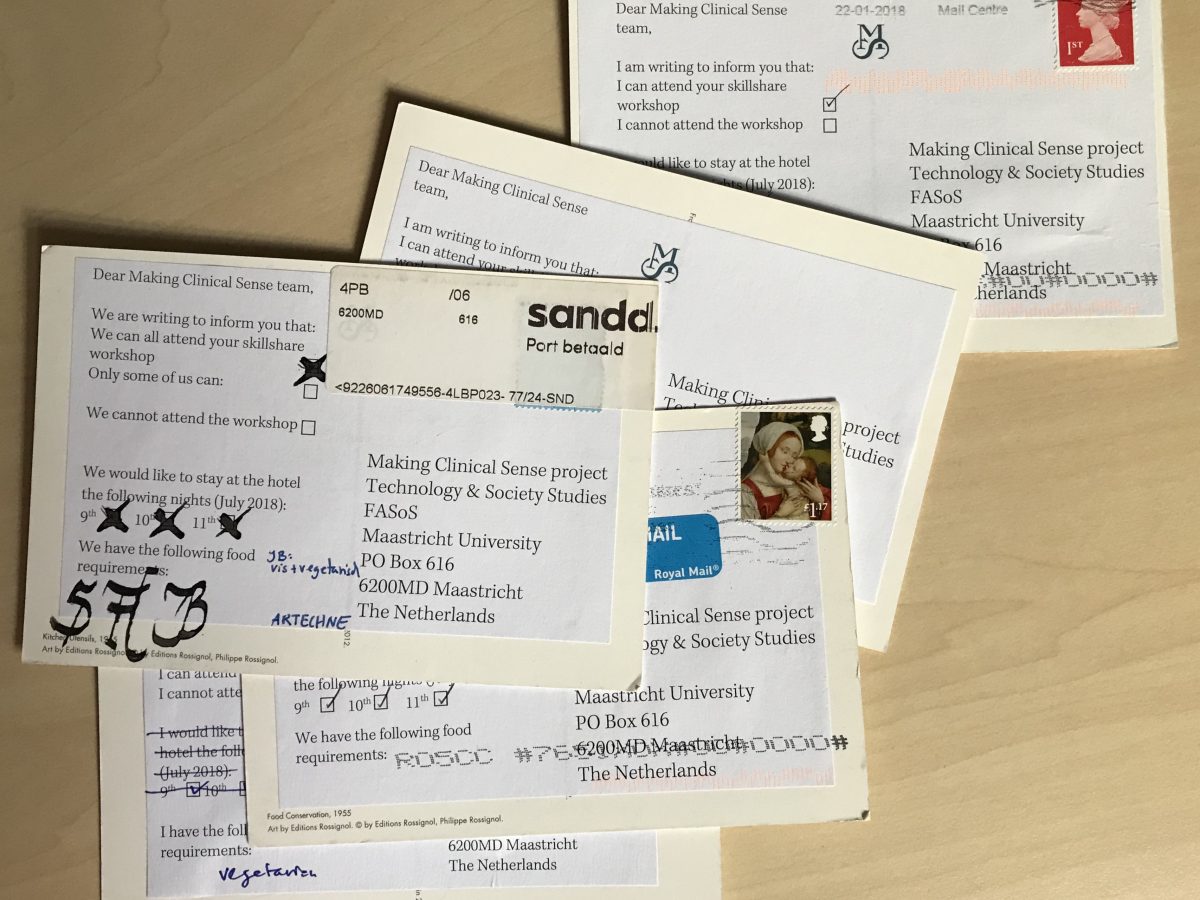
During our fieldwork, we all wrote postcards to each other and other members of their research team. The postcards document observations, ideas, dilemmas, puzzles and everyday happenings. They could only ever be thumbnail sketches– a moment or thought caught, a question that arose or a short greeting. But as we have learned in our project, from studying how doctors learn physical examination skills, there is a world of information in a thumbnail.
Through this form of “correspondence thinking”, to paraphrase Tim Ingold (2015, p154), our ethnographies are being crafted not only through individual participant observation with medical students and teachers, but also from lines threading across Budapest, Tamale and Maastricht. Ideas that we circulate on the postcards are becoming important themes in our research. Thoughts, reread weeks later, resonate with our current fieldwork in surprising ways.
Postcards are not the only way we correspond as a research team – we also use Skype, WhatsApp, email and Google Docs. However there is something particularly direct and sensuous about our fieldsites that we can convey in the postcards, in the handwritten vignette. They certainly lack in space for the drawn-out field reflections of the kind that Allaine Cerwonka and Liisa Malkki (2007) engaged in, nonetheless, the postcards help facilitate “an immersion into the ethnographic imaginations of others in [our] team” (Harris, Wojcik and Allison, under review).
Unlike in the best-selling postcard romance from the 1990s, Griffin and Sabine, where the postcard writers seem to exist in parallel and never crossing realities, we all have gathered together again in Maastricht, where our research is based. We bring our own fieldwork to the conversation, but they will not be completely new places, for we have had each other’s postcards on our desks and noticeboards, thumbnails and sketches of these other worlds.
References
Cerwonka, A and Malkki, L (2007) Improvising Theory: Process and Temporality in Ethnographic Fieldwork . Chicago and London, University of Chicago Press.
Ingold, T (2015) Life of Lines. London, Routledge.
Pandian, A. and S. McLean (Eds) (2017) Crumpled Paper Boat: Experiments in Ethnographic Writing. Durham and London, Duke University Press.
“Teachers also need to be creative when they teach clinical skills such as physical examination. They need to find imaginative ways to describe instructions expressively in protocols and then to improvise with these scripts in class in order to share expertise with students. Yet such practices often go unnoticed in medical education; they are taken-for-granted aspects of teaching and learning.”
I explore these practices with my co-author Jan-Joost Rethans in an article published this week in Perspectives on Medical Education. Entitled “Expressive instructions: ethnographic insights into the creativity and improvisation entailed in teaching physical skills to medical students”, the article, quoted above, draws from my fieldwork this year, as well as my fieldwork in the Sonic Skills project, several years ago. Working with Jan-Joost we draw out some of the themes of creativity and improvisation witnessed in teaching.
Teaching clinical skills in the theatre of medicine”, which expands upon the expertise required in improvisation. As they write, “novice teachers can read a script (clinical textbook content), but expert teachers deliver a script with sincerity that engages an audience and captures their imagination … a recipe book can instruct how to make a dish, but an expert teacher can provide room for creativeness and experimentation to produce a Michelin star meal.”
MAASTRICHT, July 9 – 12th 2018 – Written correspondence takes so many different material forms today, digital and non-digital, and it was precisely this variability in form that we wanted to play with in our first project workshop, July 9th-12th. How is a workshop conversation shaped not only by the verbal discussions that take place during the event, over lingering breakfasts, cooking classes, walking seminars and four-course dinners, but also the written correspondences crafted around it?
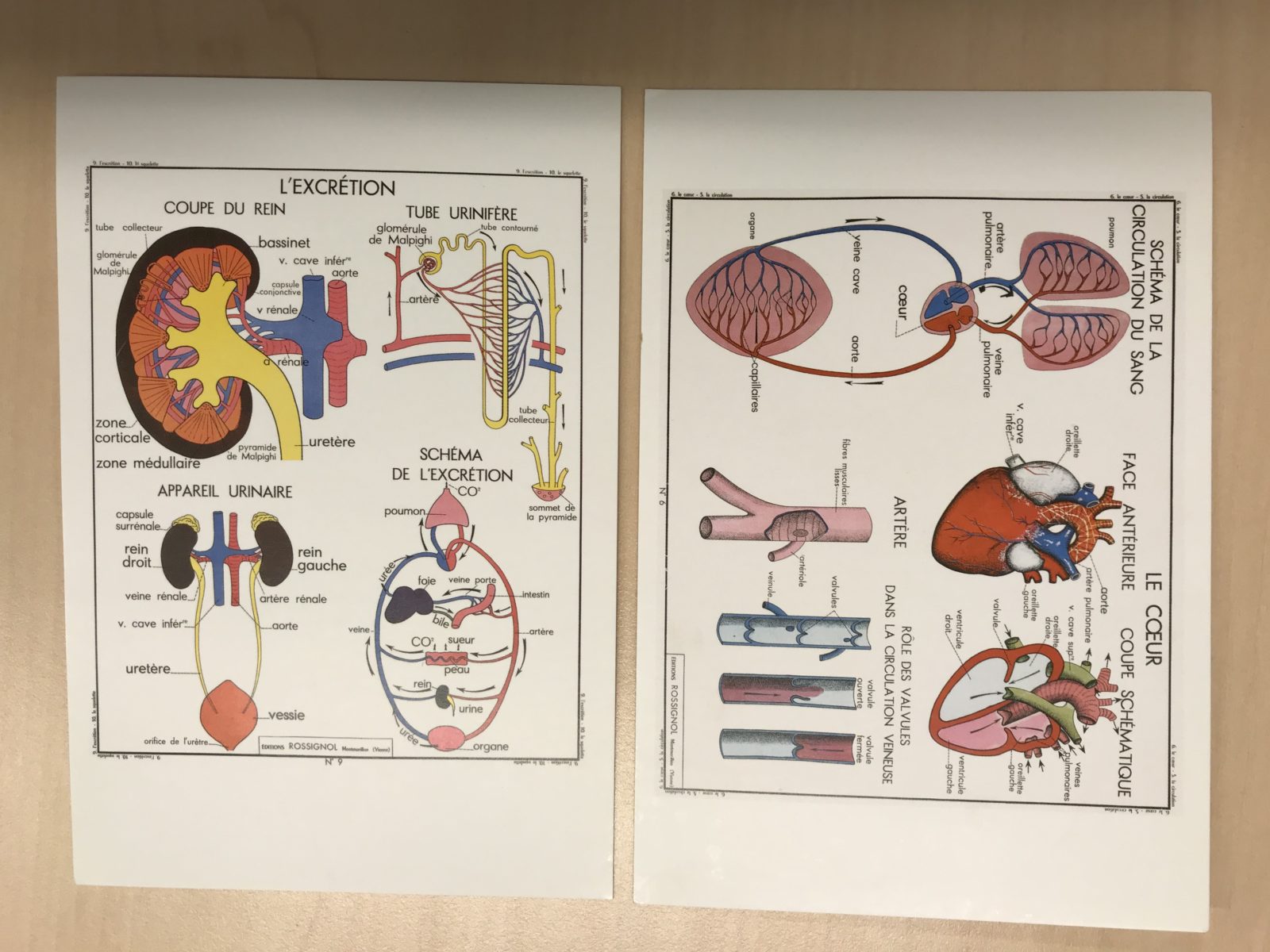
Workshopping, as the philosophers Ludger van Dijk and Erik Rietveld reminded us last week, is a situated event that extends temporally and materially. Our workshop invitations were sent early this year, on paper bought at a local newsagency, made at a Belgian paper mill. The RSVPs came back in the form of postcards, each with a different instructional teaching poster printed on one side.
In the lead-up to our workshop last week, over the last weeks and months, we continued the conversation by Skype, FaceTime, telephone, twitter and many many emails. At the workshop itself, participants received a pack with writing paper and a pre-stamped postcard. There was a letterbox for sending mail out.
Each of these forms of correspondence intersected and created not only different spaces for communication but also shaped the communication we had. Conversations co-existed in different temporal realms – an invitation in the post punctuated by emails, a postcard sent out after the WhatsApp message arrived. If we attend to the medium as message, the materiality of our correspondences takes on heightened importance. A love letter sent by pneumatic tube is different from an email written at a office desk, different from a tweet thumbed at the airport, or a postcard written in the sun.


When I was a high school student, there was a university mathematics professor who sent problems to some students around the city where I lived in the mail, photocopied equations which we were to fill out and send back to him. They would soon be returned to us marked up in red pen. We learned maths by correspondence, the teaching and learning a back and forth sent in the mail.
Members of the Making Clinical Sense team used the postal system to correspond about our developing ideas too. Seven of us in a combination of different cities for most of the last academic year, we sent each other postcards often, most arriving, some getting lost in transit, or stuck to other cards, arriving at destinations unthought of. We will be writing more about these postcards on this logbook and these cards will be displayed at the upcoming European Anthropology EASA 2018 conference in Stockholm as part of a project exploring the role of postcards in ethnographic research.
We ourselves still have to explore what it means to workshop, learn, teach, research and collaborate through different forms of correspondence; what different material forms allow space for; what it might to take seriously the message as medium; how written threads take meandering paths, intersecting and branching off as they connect and go off in their own directions.
Notes for a workshop exercise in probing comparison
1. Ask students to form groups of three
2. Each group is given a set of blank postcards.
3. Ask each group to take one postcard and write some keywords or phrases concerning their research interests: e.g. place, senses, belonging etc. They are instructed that this will help another group frame a probing activity for them that is relevant to their interests. [5 mins]
4. Groups swap their topic lists.
Each group now takes another blank postcard and writes a “probe” for the group whose topic list they have, a probe that helps the group interrogate one or more aspects of their topical interests. If this is too difficult, then another stimulating probe activity can be crafted. [15 mins]
The concept of a probe will have been explained in the talk – also examples will be given from my project’s team, of our probing activities – the instructions for the activities we did will also be printed out and available to students while they are brainstorming, if they would like sources of inspiration – also available will be the Dear Data book, and Learning to Love You More, both books having inspired our activities, and which have loads of examples)
5. The rules for the probe are as follows
- Must be possible to do within the space of the workshop grounds
- Must be achievable within half an hour
- Results must be, at least partially, able to be recorded on a postcard
6. Give the postcard with the probe activity written on it back to the other group, along with their topic list.
7. Each group reads their assigned probe and then the group of three splits, so that each person in the group does the probe activity individually, by themselves [30 mins]
8. The group reconvenes and compares their findings, first in the group of three. Group discusses together what they find interesting and insightful in comparing their findings, tacking their postcards (topic list, probe description and any relevant findings) to a large sheet of paper and drawing analytical threads where relevant [30 mins]
9. Each group presents their comparative work to the others [30 mins]
10. Group discussion about activity, focusing on comparative possibilities and limitations of methodology


Last month in our local university paper, The Observant, Thomas Fuller (my husband), describes being involved in a similar trick. He has a wonderful white tattoo of the river Thames, which snakes around his torso. Because of how his skin reacted to the white ink, it is raised a little. When he went for a dermatology check up the doctor saw the potential differential diagnosis immediately. For it also looked like it could be a parasite, winding its way under the skin. So one medical student after another was brought in to ask Thomas questions and to try and diagnosis the mysterious marking on the skin. Not one of them guessed it was a tattoo. It was a trick, designed to help hone the students’ skills of observation and diagnosis.
But tricks aren’t always useful. I interviewed one of the teachers in my fieldsite recently who designs the Multiple Choice Exams for the medical students. He said that the aim of the test is not to trick the student, but rather to help them learn. Being tricked doesn’t tell you much about what someone has learned. He designs the questions so that the students are both being examined, and learning something at the same time, through the range of options they have available. We have much more to examine from this interview, but my initial impression was sheer amazement at how much work went into designing the multiple choice tests, work I completely took for granted (like much of my teaching), when I was a medical student.
There is a global shift in higher education towards open access, expectations of engagement between researchers and society and addressing the needs of users of scholarship. Valorisation is increasingly becoming part of our job as researchers, yet we cannot all be expected to have the skills in writing for a general audience without training. This does not only refer to PhD students writing valorisation statements, but to scientists across all levels of seniority and experience at UM.
In the second week of April 2018 we were lucky to secure the services of an international expert who specialises in how to write for a broader audience: Simon Clews. Simon Clews is the Director of the Melbourne Engagement Lab at the University of Melbourne, Australia and has run an extensive repertoire of workshops across the Asia-Pacific and in North America (see http://simonclews.com/workshop-program).
In Maastricht, from the 9th – 11th April 2018, Simon Clews will run two one-day workshops for FASoS and one for the Maastricht Young Academy. The workshops will be tailored to the interests of participants, but in general, their goal will be to inspire, and equip participants with better skills for writing for the public (e.g. writing about research for non-academic audiences, generating a profile of interest to a broader public, writing short pieces for online and print media).
The goal of these workshops will not only be to provide guidance in making first or further steps into a broader public audience, but will also help train transferable skills in pitching, storytelling and simplifying a research message. They may even help participants better configure themselves as accessible brokers of knowledge, and to engage more effectively with the challenges of a transformation towards a more open knowledge future.
This writing workshop is the first in a series of writing workshops partially supported by Making Clinical Sense. It has been made possible with further funding from a Faulty of Arts and Social Sciences Valorisation Simulation Fund grant and the Maastricht Young Academy.
Image from John S’s Flickr page, used under the creative commons lisence.
I was fortunate to be involved in Mark Paterson’s “Haptics, Creativity, and Knowledge Between Bodies” session on March 22nd, which he summarised as follows:
How is haptics involved in knowledge creation? What knowledge is produced in reconceptualizing touch through other means? There is a humanist privileging of a certain kind of knowledge gained directly through the hands in craftsmanship, painting, and skillful training. Some see this as partially translating into digital craftsmanship and computer-aided design. The engineering of force feedback (haptics) involves hands, muscles, and skin in active engagement with digital sensation for the purposes of the design of objects and textiles, then, but also for more wholly embodied entertainment and performance experiences. Videogame controllers buzz in our hands, while haptic bodysuits stimulate hands and other body parts for fun or art. Scientific processes of sensory mapping, the engineering of the interface, electrical and electronic entertainments, and the use of the body in performance each in their own way involve a creative approach to knowledge production: creative arrangements of the senses, translations between modalities, a realm of experimentation in the service of knowing more about bodies, senses, and space – what Michel Serres describes as a ‘mingling’ of the senses. Increasingly, social science understands the importance of such sensory knowledge production, and involves its own creative methodologies and approaches when it comes to bodies and their boundaries. The day will consist of talks and demonstrations around touch, haptics, and performance.
I got to meet the fabulous and inspiring Kate Elswit, Carey Jewitt, David Parisi and Stahl Stenslie, all who had previously sat on my bookshelf and on class readers, yet were now here dancing, gesturing, eating delicious vegan food, breathing, talking together.
My talk was titled “Simulating Touch: Learning Tactility through Analogy in Medical Education”:
Doctors, like artists, work intensely to train their sensory perception. This training is being reconfigured through the introduction of digital technologies. For centuries, medical students have learned sensory skills important to diagnosis through the apprenticeship model, following mentors, and examining patients in hospital wards, clinics, and private homes. For reasons of standardization, efficiency, safety, shorter hospital stays, and fewer home visits, more and more doctors learn clinical skills outside the hospital, often in simulated settings including digital environments. Dissection, once a formaldehyde-infused rite of passage for medical students, is increasingly being performed on dazzling virtual screens, where cuts with the scalpel are made with a swipe of a finger. Not all forms of simulation are new and digital, however. Models, made of leather and other fabrics, have long been used to teach techniques such as delivering a baby, and still have a place in medical schools today. In this presentation I will invite the audience to take part in some hands-on teaching exercises used in medical schools to train the sense of touch, using curious objects such as oranges, knitted sweaters, socks, and water-filled gloves, as well as some digital applications. In the process I will trace some of the material assemblages used in training tactility in medicine today, and how clinical touch gets reconsidered in these various analogous forms. The underlying paper draws on the findings of my ongoing fieldwork in a clinical skills laboratory in Maastricht, a study that is part of a broader ERC-funded ethnographic and historical project on the role of digital and other technologies in training doctors’ sensory skills of diagnosis.
{This image is from Anna’s 2016 article in The Senses & Society called “The Sensory Archive” in which she discusses a public art event exploring the theme of training the senses. The event was a collaboration between Anna and the choreographer, Peggy Olislaegers, at the Marres House for Contemporary Culture}
Movement, stasis and interoception: unsettling the body
Andrew Russell (Durham University)
Anna Harris (Maastricht University)
Jane Macnaughton (Durham University)
The movement of bodies is a key focus of attention for wellbeing and health in both clinical and non-clinical contexts. For example, the training of health professionals involves the unsettling of the body to take on new forms of movement in relation to examination techniques, caring practices and surgical procedures. These new movements must become embodied, or settled within the body in order for practices to become expert and second nature. Secondly, for those with a chronic illness, new approaches to movement are also gaining increased attention, not just because of their role in enhancing fitness, but because they direct individuals’ attention upon the body. Chronic debilitating illness, such as respiratory disease, is often associated with reduced bodily movement, and in turn with poor interoceptive (internal body) awareness. Reduced interoception is equated with problems of accuracy in symptom perception, and can lead to worsening outcomes, loss of agency and control. New approaches to movement in community settings, including arts-based interventions using dance or singing in the case of lung disease, aim to unsettle habitual embodied states. These are just two examples of possible topics this panel might address in applying anthropological concepts and techniques to better understand the relationships between movement, stasis, interoception, health and wellbeing. It thus offers a different take on the conference theme of ‘moving’, one that focusses on how movement unsettles and reorients individual, social and political bodies, enabling new perspectives not only on moving but on stasis and repose.


Comparison as method
In this WiP meeting we do not discuss a paper or presentation we are working on, but rather a methodological experiment in progress, one that aims to tickle the comparative approach used in a group project.
For the past three months we have been doing ethnographic fieldwork as part of the Making Clinical Sense project. The overarching project has obvious points of comparison. Three fieldsites, medical schools, in three different countries (Hungary, Ghana and the Netherlands) for a start. A historian, John Nott, has just joined the group, so there will be comparisons between the present and the past. And it was proposed in the grant application that we would focus on four pre-defined technologies, to aid the comparison across time and place.
Before embarking on fieldwork we introduced another form of, or strategy for, comparison, one we hoped would take us in unexpected or surprising directions. We designed a series of weekly activities. Each week during our fieldwork last year we performed the same activity at each of our fieldsites. Activities included re-enactments, drawings, sound recordings among others. The activities meant we saw glimpses of the others’ fieldsites, highlighting the similarities but also the specificities of local difference. Absences and presences we hadn’t considered became more visible. The activities forced us to consider our ethnographic habits, to see the site in ways we might not have previously. It also meant we had to make some of our fieldwork choices explicit, as well as spend time focusing on something we may not have given the time to. During all of this we started to calibrate to each other as researchers too.
Along with others in STS (Deville, Guggenheim and Hrdličková 2016) we would like to consider the practical act of comparison more carefully, to unpack it, to have fun with it and to question it. We are exploring the meaning of our experiments in comparison as one example of this, as well as what comparison means for the project more broadly, and would like to open that exploration to others in the MUSTS research group for feedback and ideas. With another period of fieldwork ahead of us we hope to discuss with you ways to focus our experiment, as well as open it up to possibilities we haven’t yet considered.
“I used to make my own clothes, including neckties. With my friend and fellow medical student Mimi, we bought silk and learned how to make ties which we sold to other medical students needing to look more professional in the eyes of patients and the doctors teaching and assessing them. When making ties we learned to work on ‘the bias’. This means working with fabrics against the grain, or obliquely. This is done in tie-making, and in other forms of tailoring and sewing, so that the garment hangs in a particular way. Clothes made on the bias are more giving, flexible and fluid……” Read more